



In hospitality, having a space that is comfortable, cool, and low maintenance is more critical than ever. Whether it is a boutique hotel, a resort, or a luxury lounge, furniture plays an important role in the guest experience. While built-in furniture has its applications, loose furniture is the design trend du jour in contemporary hospitality design.
But what exactly is loose furniture, and why do project managers and hotel designers adore it so much? In this article, we’re going to break down the five biggest reasons loose furniture is ideal for hospitality projects — from being more flexible and installed more quickly to cost savings and design freedom. If you’re a hotel or resort designer, understanding how loose furniture is utilized can make your spaces perform better and look fantastic.
Let us begin by defining what we refer to as “loose furniture” in hospitality.

What is Loose Furniture in Hospitality Design?
Loosely speaking, loose furniture is that which is not fixed or anchored to the building. Sofa, chairs, ottomans, coffee tables, and beds are some examples. These can be shifted, replaced, or rearranged with ease. Built-in furniture, on the other hand, is anchored to the floors or walls, such as banquette seating, wall-mounted desks, or fitted wardrobes.
Loose furniture is especially common in public areas like hotel lobbies, guest rooms, lounges, and outdoor areas. It provides designers and managers with the room to combine and interchange without making major renovations.
Why is that significant? Because in the hospitality business, change is a regular occurrence, and it’s sudden. Whether you’re doing an appearance refresh, preparing for a holiday, or simply responding to your guests’ needs, the ability to change your furniture configuration is a big advantage.
That leads us to the first significant advantage.
Loose Furniture Makes Spaces Flexible and Adaptable
Think about how much can happen in a hotel lobby: chance encounters, check-ins, pop-up boutiques, parties, etc. With fixed furniture, you only have one design. But with mobile furniture, you can change the space based on the event.
For instance, an ad-hoc group meeting space, a quiet reading nook, or a coffee-tasting event station can be created instantly from a living room with movable chairs and tables. Outdoor spaces can also be updated seasonally — relocating sun loungers to a different spot in summer and substituting with more
embracing seating in winter.
This type of flexibility assists hotels and resorts in maintaining their areas clean and guest-friendly. It also enables efficient utilization of space, particularly in multi-purpose spaces.
But it’s not just flexibility — time and efficiency are also factors. That leads us in turn to our next argument.

Fast, Hassle-Free Installation Saves Time and Labor
Hospitality developments are usually on a tight schedule. Whether you are opening a new development or refurbishing one, it’s costly to be behind schedule. One of the best things about loose furniture is that it speeds up the installation process.
Since they do not have to be integrated into walls and floors, they can be shipped, unpacked, and installed with little labor. No drilling, no construction team, or no specialist equipment. This can be cost- and time-saving in fit-out or refurbishment.
Besides, loose furniture is easier to reconfigure for photo staging, previews, or soft openings. You can easily modify without necessarily having to depend on contractors or carpenters.
If time equals money, then mobile furniture delivers real value. But where is the creativity? Are you still able to design a space with a sense of uniqueness and on-brand with movable furniture? Yes — and that is where design freedom comes in.
Design Freedom: Loose Furniture Brings Your Brand to Life
Each hotel brand has a history behind it, and furniture is part of that history. With unanchored furniture, interior designers have more freedom to choose furniture that expresses the appearance and ambiance of a hotel’s brand.
Desire a relaxed beach atmosphere with wood and soft fabrics? Or a dramatic, modern look with rich colors and sharp lines? Casual furniture enables you to mix up styles, textures, and arrangements without being stuck in one look for all eternity.
Even better, when a brand shifts or alters its visual identity, it’s simpler to replace or refresh loose furniture than to rebuild custom fixed elements. This is especially useful for hotels or franchises that want consistency across locations, but also need regional personality.
Design flexibility also enables hotels to keep pace with trends or guest tastes. And if you can renew without a full renovation, you save more than time.
Talking about savings, we should also discuss cost.
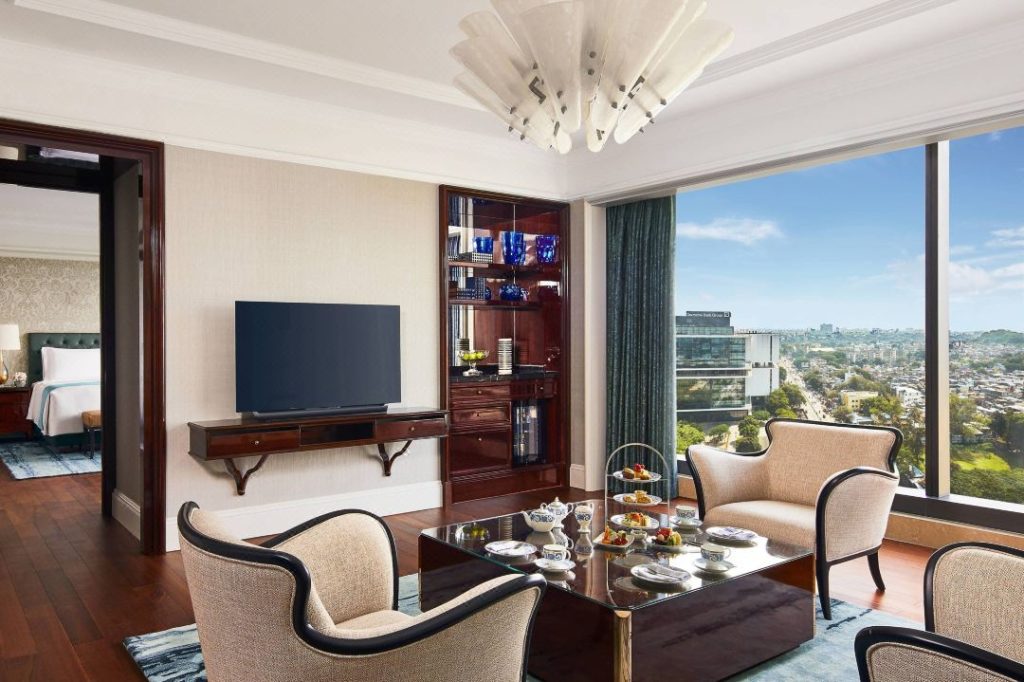
Loose Furniture is Cost-Effective and Eco-Friendly
Budget is always a consideration in hospitality design. One of the reasons why so many hotels like loose furniture is that it’s cheaper, not necessarily initially, but in the long run.
Integrated furniture will likely have to be custom-made, labor-intensive, and have slow lead times. It’s expensive and difficult to replace when damaged. Loose furniture is easier to acquire, easier to replace, and usually shipped in quantities ready to go.
This flexibility enables you to expand your design according to your budget. Start with the priority areas, and then include the rest when the occasion arises. You can even reuse items for future properties or other spaces of the same hotel.
Loose furniture also supports sustainability programs. Modular, local, and reusable items can reduce waste and enable brands to earn eco-friendly certifications. The majority of hotels today market their sustainability message, and using loose furniture supports that message in a real, measurable way.
Having outlined the practical benefits, let us now consider how a company like Harman Furnishings can make it happen.
Why Harman Furnishings is Your Loose Furniture Design Partner
Acquiring the correct loose furniture is not a matter of buying pleasant chairs or fashionable sofas. It’s about knowing what each space needs to function, to improve the brand, and to get there on time within budget. That’s where Harman Furnishings truly excels.
We collaborate with hotel owners, architects, and designers to create intelligent, stunning, and long-lasting furniture solutions. Perhaps a bespoke sofa for a high-end lobby or rugged lounge seating for a rooftop bar. We assist you in getting the right fit, in form and function.
Our internal staff oversees all phases, ranging from material procurement and prototyping to delivery and installation support. Having worked long and hard on a wide range of hospitality projects, we understand how to get furniture to work in real spaces.
We don’t merely sell furniture at Harman Furnishings — we build experiences that last. And we do it with adaptive furniture solutions that are as adaptive and flexible as your company has to be.
Conclusion
Here are the five reasons why loose furniture is the smart choice for hospitality projects:
- It forms flexible, adaptive spaces that respond to evolving requirements.
- It is quicker to install, conserving time and money in tight project schedules.
- It gives you creative freedom to convey your personality and brand.
- It is cost-effective, simple to replace, and eco-friendly.
And with the right partner, it is easy to organize and obtain.
In a fast-moving business where looks matter and deadlines loom, loose furniture offers the perfect blend of performance, flexibility, and looks.
Require help in choosing appropriate loose furniture for your hospitality company? Let’s discuss. Harman Furnishings stands ready to assist you in achieving what you desire — beautifully, functionally, and within your budget.
FAQs
1. What is loose furniture in hospitality design?
Loose furniture is furniture that can be moved, such as chairs, sofas, and tables, which are not permanently attached to the building. They can quickly be replaced or rearranged to suit alternative layouts or applications.
2. How is loose furniture different from fixed furniture?
Fixed furniture is integrated into the building, such as wall desks or fixed banquettes. Loose furniture is portable and not meant to be fitted into walls or floors.
3. Why is there loose furniture in hotels?
Hotels prefer loose furniture because it is adaptable, inexpensive, and easier to re-decorate when styles or needs in a room change.
4. Is loose furniture sufficiently sturdy for high-traffic areas?
Yes. Business-quality loose furniture is meant to endure a lot of wear and tear and is typically constructed of low-maintenance, easy-to-clean materials.
5. Is loose furniture customizable to a brand’s aesthetic?
Yes. Loose furniture can be tailored to materials, finishes, fabrics, and sizes to fit any hospitality brand.
6. Is built-in furniture less expensive than loose furniture?
For the most part, yes. Loose furniture is usually less expensive to purchase, install, and replace, so it is more economical.
7. Why does loose furniture help with sustainability?
As it is removable and recyclable, loose furniture is not as wasteful. It can be relocated, reused, or recycled as and when required.
8. Is loose furniture permissible in outdoor applications in hospitality facilities?
Yes, there are several manufacturers that provide outdoor-rated loose furniture that is weather-resistant and ideal for use on patios, terraces, and poolside.
9. Is loose furniture suitable for luxury hospitality developments?
Yes. Some luxury hotels use loose furniture that is designed to produce elegant, upscale settings but remains adaptable.
10. How may Harman Furnishings help with loose furniture selection?
Harman Furnishings offers design support, purchasing, and customized furniture solutions to ensure your hospitality facility is beautiful and functional.


